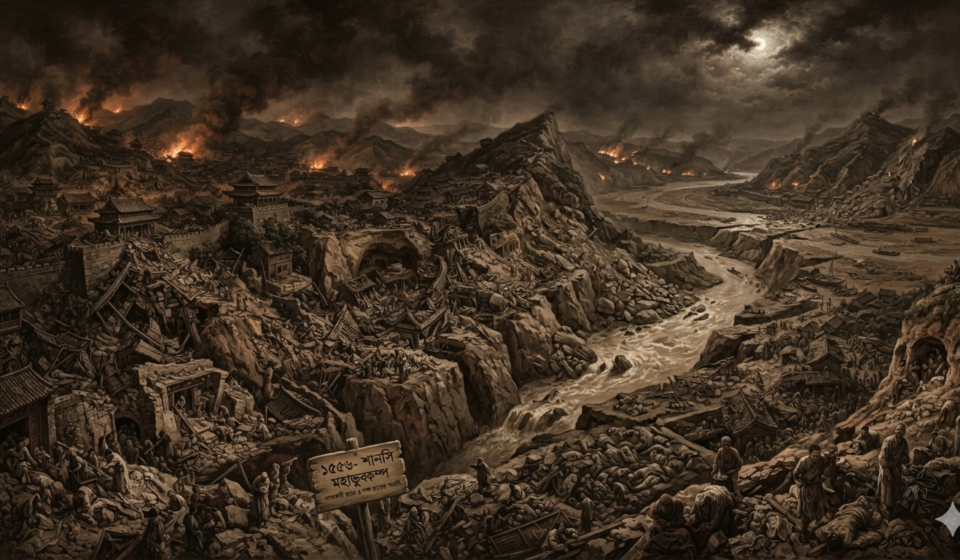

As bodies are recovered one by one from the rubble of the recent earthquake in Venezuela, history brings to mind the deadliest earthquake the world has ever witnessed. The earthquake that struck China’s Shaanxi province on January 23, 1556, remains recorded in history as the most devastating one to date. Nearly 900,000 people perished in that cataclysm in just one night.
At the time, China was under the rule of the Ming Dynasty. It was the early morning of January 23, 1556, when a massive earthquake struck the Huaxian area of Shaanxi. It measured approximately 8.0 on the Richter scale. However, the true cause of the widespread destruction lay in the local housing practices.
Most people in northern China lived in ‘Yaodongs’—artificial cave dwellings carved into steep hills of loess soil. Under the violent shaking of the earthquake, these caves collapsed instantly, burying alive the hundreds of thousands of people sleeping inside.
According to Chinese records, approximately 100,000 people died directly from the earthquake itself. However, the subsequent landslides, epidemics, famine, and exposure to the cold brought the total death toll to around 830,000. Some estimates suggest the figure was closer to 900,000.
The landscape itself was transformed. The intensity of the tremors shifted mountains, altered river courses, and completely destroyed roads. The ground split open, creating new hills and valleys. Landslides buried entire villages underground within minutes. The regions of Huaxian, Weinan, and Huayin suffered the most damage; in some areas, 60% of the population was wiped out.
Why was the devastation so severe?
- Yaodong cave dwellings: Homes carved into soft loess soil were highly vulnerable to earthquakes. Roof collapses trapped and crushed hundreds of thousands of people.
- A winter dawn: The event occurred at dawn during the biting cold of January, a time when most people were asleep. There was no chance to escape.
- Aftershocks and Famine: Aftershocks continuing for months following the main tremor caused further destruction of homes. With agricultural land ruined, famine and disease spread.
To this day, the Shaanxi earthquake remains a ‘case study’ in civil engineering and disaster management textbooks. Experts note that the death toll is determined not merely by the magnitude of the tremor, but by three key factors: construction techniques, population density, and the timing of the event.
A recent tragedy in Venezuela has once again highlighted human helplessness in the face of nature. Meanwhile, that dawn in Shaanxi 468 years ago stands as proof that a tremor lasting just a few seconds can become history’s deadliest killer.